
What Is EdTech in Education?
Understanding How Technology Is Transforming Modern Learning

The use of technology is now part of the normal learning process. Students can participate in a class from the comfort of their home, view a recorded class, access course resources online, or use an educational app on their mobile phone to take an online quiz. These are all examples of how technology is being used in the classroom.
You've probably encountered the term EdTech, too. It is a short form of Educational Technology and is now an important aspect of education in Sri Lanka and the rest of the world today.But what is EdTech exactly? What are its uses in education, and what does it mean to students and educators?
What Is EdTech?
EdTech is the use of technology of improve teaching and learning.Simply put, it is the combination of education and technology. This can range from a teacher using a digital presentation in the classroom to a student taking a full course in an online learning platform.
Examples of EdTech include:
- Online learning platforms
- Learning Management Systems
- Virtual classrooms
- Educational websites and mobile apps
- Digital textbooks and learning resources.
- Online quizzes and assessments.
- Educational videos
- Interactive learning activities
- Artificial intelligence (AI) tools.
- Virtual and augmented reality
EdTech is more than just the latest technology. Its primary aim is to use appropriate technology to support teaching and learning in a simple, accessible, and useful way.
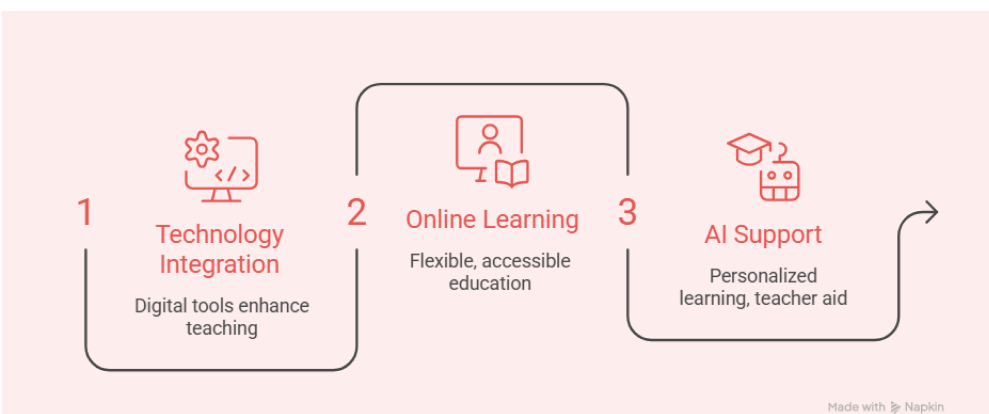
What Is Educational Technology in Education?
If you're looking for the definition of educational technology in education, it's the use of technology in teaching and learning.
For example,
Let’s say that a teacher may be trying to explain a complex concept in science. In the process of teaching, the teacher might use a textbook and also an interactive presentation or play a short instructional video. In this process, technology provides students with another means of learning the topic apart from the textbook.Students can take an online quiz after a lesson and review their learning, or study the topics they got wrong and know which lessons to attend more, since the results are instant. This is what we call learning technology.
Educational Technology Meaning
The definition of educational technology goes beyond using computers in a classroom.
Educational technology consists of:
- Technology – devices, software and digital platforms used for learning
- Learning resources – videos, digital books, presentations and interactive content
- Teaching methods – ways technology can be used to improve how a lesson is delivered
- Assessment – digital tests, quizzes and tools used to check student progress
- Communication – tools that allow teachers and students to communicate online
Educational technology is not simply the use of devices. It is also the way that technology is put to use supporting learning.

How Is EdTech Used in Education?
1. Online Learning
One of the most common applications of EdTech is online learning. Students can learn online instead of attending all lessons face-to-face. They may be able to use:
- Live online classes
- Recorded lessons
- Course notes
- Videos
- Assignments
- Online discussions
- Quizzes and assessments
This is a good option for students who live far from an education provider or have work and other commitments.
2. Learning Management Systems
A Learning Management System, commonly known as an LMS, is a platform for managing learning. An LMS can bring different parts of a course together in one place. For example, students may log in to:
- View their lessons
- Download learning materials
- Submit assignments
- Complete quizzes
- Receive announcements
- Communicate with tutors
- Check their progress
For education providers, an LMS can also make it easier to organize courses and manage learners.
3. Virtual Classrooms
A virtual classroom allows teachers and students to interact online. Instead of everyone being in the same physical classroom, students can join a lesson from different locations. A virtual classroom may include:
- Video and audio
- Screen sharing
- Online presentations
- Chat
- Digital whiteboards
- Group discussions
This can be useful for schools, universities, professional training, and other forms of education.
4. Digital Learning Materials
Printed books and notes are still useful, but students now have access to many digital resources. These can include:
- E-books
- Educational videos
- Digital presentations
- Online articles
- Interactive exercises
- Simulations
- Digital notes
Students can often access these materials through a computer, tablet, or smartphone.
5. Online Assessments
We can use technology in the process of assessing students. Instead of completing every paper test, students can answer questions through an online platform and get results instantly, helping them understand how they do and which areas need more attention.
What Are the Benefits of EdTech?
When it is planned and used properly, EdTech can provide several benefits.
Flexible Learning
Students have different schedules and responsibilities. Online learning lets them study from home or another suitable location instead of traveling to a classroom for every lesson. This can be especially useful for:
- Working adults
- Distance learners
- Students living far from education centers.
- People studying alongside other commitments
Wider Access to Education
Technology can be useful in reaching learners with learning opportunities that are outside of their area of access. A student who resides outside of Colombo could enroll in an online course taught by an education provider in Colombo, or another country without having to move to that country. Although online learning can't take the place of all the obstacles in the way of learning, it can help diminish the distance barrier to learning for students who want to continue their education.
Learning Resources in One Place
A combination of lessons, notes, videos, assignments, and assessments can be defined as digital platforms. This method lets students find what they need in one place without wasting time searching in different places.
More Ways to Understand a Topic
The studying methods of students may vary. While some like to study with books, others may find it easy to study with videos and practical activities. Teachnology helps students in different ways to understand the same topic in different ways.
Faster Feedback
Most of the digital platforms give students immediate feedback. The best example is an online quiz. Instant feedback after completing the quiz helps students see how they performed.
Support for Teachers
EdTech can also help teachers and tutors. Digital tools can be used to:
- Prepare lessons
- Share resources
- Create quizzes
- Collect assignments
- Communicate with students
- Monitor progress
This helps teachers manage their time and focus more on students' academics without repetitive tasks.

What Are the Challenges of EdTech?
EdTech has many benefits, but technology also brings its own challenges.
Internet and Connectivity
Online learning always depends on a reliable internet connection. This can be challenging for students with unstable internet connections.
Access to Devices
Everyone might not have a well-performing device with them. There are certain activities, like downloading a large file, and some applications that only work with a laptop or a desktop. So this is an important point to be considered.
Technical Problems
Technology can sometimes cause problems during learning. Students or teachers may experience:
- Connection issues
- Software problems
- Login difficulties
- Device problems
- Audio or video issues
Having technical support and clear instructions can help reduce these problems.
Distractions
When using a digital device, access to social media, games, and other distractions is slightly more than when sitting in class and studying.
Digital Skills
Using technology effectively is also important. It applies to both teachers and students.
Does EdTech Replace Teachers?
No. Technology is there only to support the education system as a whole; it does not mean that the role of a teacher has to be removed. To understand students and help them clarify their confusion, a teacher is still essential. Teachers also provide:
- Guidance
- Feedback
- Encouragement
- Discussion
- Practical support
- Personal interaction
The best use of EdTech is often to combine technology with effective teaching rather than treating technology as a replacement for teachers.
How Is AI Being Used in EdTech?
Artificial intelligence is becoming another part of educational technology. AI tools can support learning in different ways, such as:
- Providing explanations
- Creating practice questions
- Giving feedback
- Supporting personalised learning
- Helping teachers prepare learning materials
One possible use is personalised learning. A digital system can look at a student's progress and recommend additional practice in areas where they are struggling. However, AI needs to be used responsibly. Students should not depend on AI to do all their work for them. They still need to understand their subjects, develop their own ideas, and learn how to solve problems. AI should support the learning process rather than replace it.
What Is the Future of EdTech?
Educational technology will keep developing as new tools become available.
Some areas that are already influencing the field include:
- Artificial intelligence
- Personalised learning
- Mobile learning
- Learning analytics
- Virtual and augmented reality
- Interactive digital content
- Online assessment
However, the most important question should not be “What new technology can we use?” It should be “How can this technology help students learn better?” A simple online tool may be more useful than an advanced system if it solves a real learning problem. For education providers, this means choosing technology based on the needs of students and teachers, not simply because it is new.
Career Opportunities in EdTech
EdTech is also creating career opportunities for people with different types of skills. You do not necessarily have to be a teacher or a software developer to work in the field. Possible areas include:
- Instructional design
- Digital learning
- Educational content development
- LMS administration
- Software development
- UX/UI design
- Data analysis
- Online course development
- Digital marketing
- Education project management
This makes EdTech a broad field where education, technology, design, content, and business skills can come together.
Frequently Asked Questions About EdTech
What does EdTech stand for?
EdTech means Educational Technology. In other words, we can say that technology supports teaching and learning.
Is online learning the same as EdTech?
No. Online learning is one part of EdTech.
Is EdTech only for schools?
No, it can be used in schools, universities, vocational education, professional training, private education institutes, and other learning environments.
Can EdTech replace teachers?
EdTech is designed to support teaching and learning. It does not remove the need for teachers, who provide guidance, feedback, explanation, and personal support.